A gentle, structured path forward
Recovery can affect far more than the body. It can impact confidence, consistency, emotional regulation, daily structure, and your sense of self.
This support is designed to offer compassionate, practical guidance for people rebuilding momentum after concussion — one manageable step at a time.
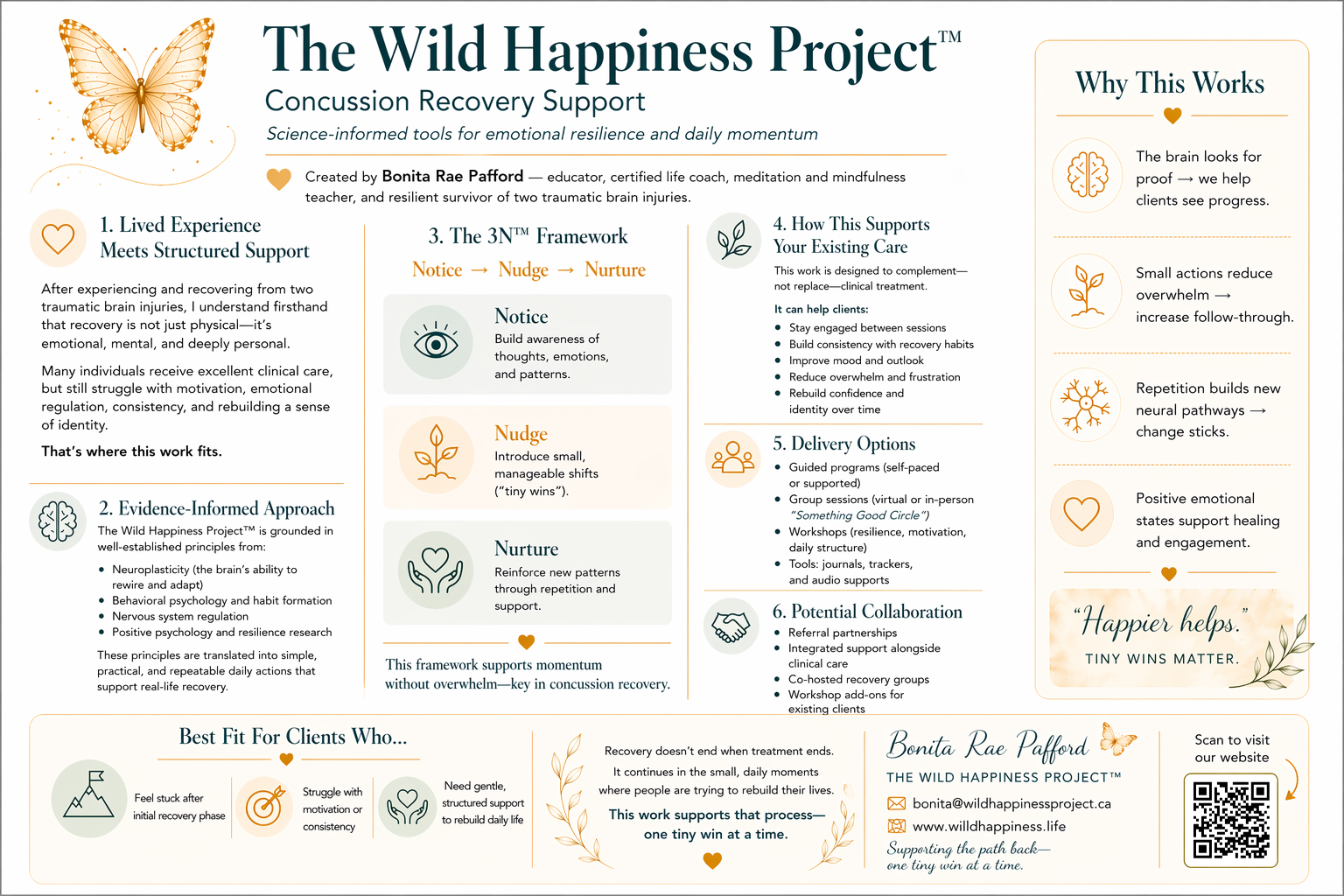
Best fit for people who...
- Feel stuck after the initial recovery phase
- Struggle with motivation, habits, or daily follow-through
- Need gentle support without added pressure
- Want tools that complement existing clinical care
Why this approach helps
Small, supported actions are often more effective than pressure when someone is trying to recover confidence and consistency.
- Small wins help the brain recognize progress again
- Reduced overwhelm improves follow-through
- Repetition supports steadier habits and new patterns
- Gentle emotional support can improve engagement in recovery
Tiny wins matter
The 3N™ Framework
Notice → Nudge → Nurture
Notice
Build awareness of thoughts, emotions, triggers, and patterns without judgment.
Nudge
Introduce small, manageable shifts that feel doable rather than overwhelming.
Nurture
Reinforce new patterns through support, repetition, and compassionate follow-through.
What support can look like
- Guided sessions tailored to your current recovery stage
- Simple tools for emotional resilience and daily structure
- Support with habits, momentum, and follow-through
- Reflection practices, resources, and gentle accountability
- Practical ways to reduce overwhelm and rebuild confidence
Created from lived experience
This work is shaped not only by training and professional practice, but also by lived experience with traumatic brain injury and recovery.
That means the support is grounded, compassionate, and deeply aware of how nonlinear and personal recovery can feel.
Start with a conversation
You do not need to figure everything out today. Start with one supportive step. Book a consultation and let’s explore what kind of support would feel most helpful right now.